
From ribeye to sirloin: How much protein is in steak?
How Much Protein Is in Steak? A Complete Guide


.jpg)

Key takeaways
- Steak is a rich source of high-quality protein, with different cuts offering varying amounts. Leaner cuts like flank steak and top round provide the most protein per serving while also being lower in fat.
- Cooking methods and portion sizes significantly influence the nutritional value of steak; grilling or broiling with minimal added fat helps retain protein content and reduces unnecessary calories.
- While steak can be part of a healthy diet, moderation is essential to avoid excessive saturated fats and cholesterol. It's important to eat a variety of protein sources, such as chicken, fish, or plant-based options.
By now, you probably already know that eating high-quality, protein-rich foods has several nutritional benefits. If you've been hitting the gym lately or are just interested in eating more protein-rich foods, you may have wondered how much protein is in a steak.
Is steak the best source of high-quality protein you can find, or is there a higher protein content in other foods? Can I eat steak while on a weight loss journey, or should I swap it out for something with fewer calories? What essential nutrients are in steak, if any?
In this article, we'll break down all of the above, and then some. Welcome to your complete protein guide.
Which meat is highest in protein?
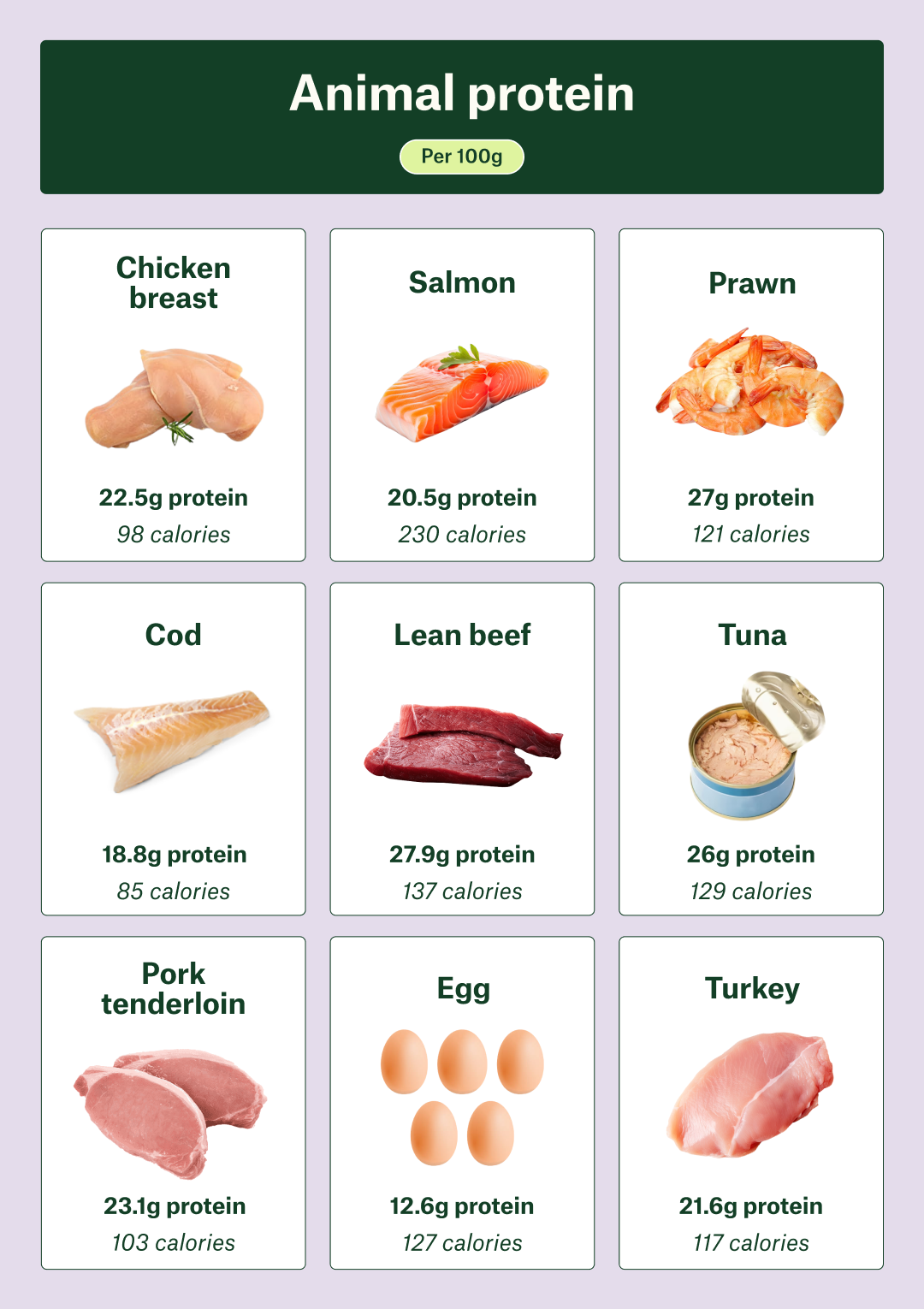
With around 30 grams of protein per 100 grams [1], chicken breast is generally considered the meat that is highest in protein content.
Chicken breast is also a lean meat, which means it contains little fat and is an excellent protein source for anyone looking to lose weight, build muscle, or maintain a balanced diet.
But how much protein is in other meats? Let's talk nutritional content. Here’s how other meats compare in protein content per 100 grams when cooked without skin or other added fat:
- Turkey breast: ~30 grams of protein
- Lean beef: ~26-27 grams of protein
- Pork loin: ~26 grams of protein
- Lamb: ~25 grams of protein
- Fish (such as tuna or salmon): ~22-30 grams of protein, depending on the type
If you're looking to include more protein in your diet, focus on protein-dense, lean cuts of meat, and avoid adding excess saturated fats while cooking.
This will ensure you get the most health benefits from your meals.
Different steak cuts and their nutritional value
"How much protein is in steak?" may seem like a straightforward question, but it's actually a little more complicated than that.
You see, different cuts of steak have various grams of protein per 100 grams, and some steak cuts are higher in fat content. Basically? Not all steak cuts are built the same.
The steak cuts with the most grams of protein are the flank steak, top round and bottom round, which are also the leaner cuts.
However, many people find that popular cuts like ribeye, skirt steak and strip steaks are more flavourful, due to their higher fat content.
Additionally, the way you cook your steaks will affect the different cuts and their nutritional content.
For example, grilling, broiling, or pan-searing your steaks with minimal added fat is ideal, as these methods will give you the nutritional value of the protein without the added fat intake.
Here’s a breakdown of some common cuts and their approximate nutritional profiles per 100 grams (cooked) [2]:
1. Sirloin
- Protein: ~27g
- Fat: ~9g
- Calories: ~200
2. Tenderloin (filet mignon)
- Protein: ~26g
- Fat: ~7g
- Calories: ~185
3. Ribeye
- Protein: ~24g
- Fat: ~20g
- Calories: ~290
4. T-bone
- Protein: ~25g
- Fat: ~18g
- Calories: ~275
5. Strip steak (New York strip)
- Protein: ~25g
- Fat: ~12g
- Calories: ~230
6. Flank steak
- Protein: ~28g
- Fat: ~7g
- Calories: ~190
7. Skirt steak
- Protein: ~27g
- Fat: ~10g
- Calories: ~210
8. Top round (London broil)
- Protein: ~29g
- Fat: ~4g
- Calories: ~160
9. Bottom round
- Protein: ~28g
- Fat: ~4g
- Calories: ~150
10. Flat iron
- Protein: ~25g
- Fat: ~10g
- Calories: ~200
Does steak lose protein when cooked?
While steak and other meats do lose some protein when cooked, it's not a significant amount [3].
Rather, the main changes that occur during cooking are related to water content and fat, rather than a major reduction in protein. Here's how cooking affects steak:
Water loss
Cooking steak causes it to lose water, which can concentrate the protein in a smaller portion [5].
For example, a 200g piece of raw steak may weigh around 150g after being cooked, but the protein content stays roughly the same, so it's more concentrated in the cooked steak.
Fat loss
Some of the fat in the steak will melt and drip off during cooking, depending on the cut and method used. This can reduce the overall fat content in the steak, making it leaner.
Minimal protein breakdown
Protein in steak is stable at typical cooking temperatures, so there’s not a significant loss of protein itself during cooking. However, overcooking can cause the steak to become tough, as the proteins tighten and expel moisture, which can lead to a slight reduction in protein concentration.
In short, while steak may lose some water and fat during cooking, the protein loss is minimal, and it remains a great source of protein, especially when cooked properly.
How much protein your steak retains also depends on the cooking method, with higher temperatures tending to affect protein content more [3].
Can you eat too much steak?
Yes, it’s possible to eat too much steak, and overconsumption can have negative effects on your health, depending on the quantity, frequency, and balance with other nutrients in your diet.[4]
Steak, especially fattier cuts, can be high in saturated fat and cholesterol, which may impact heart health when consumed in excess.
Some steak cuts have a higher fat intake than others, which means they are higher in both saturated fats and cholesterol. When consumed frequently, this can lead to an increased risk of heart problems [6].
Our bodies need a balanced diet from varied sources to get all the essential vitamins and minerals we need to sustain our overall health.
Eating too much protein can cause nutrient imbalances. Notably, when you don't get enough fibre, you may soon find yourself dealing with bloating, discomfort, or constipation [7].
In general, moderation is essential.
Steak can be a healthy part of a balanced diet when consumed occasionally and in appropriate portions (85-115g per serving), but it's important to rotate your protein sources and make sure you're getting proper nutrition across the board.
Healthy ways to enjoy steak
There are several ways to enjoy steak while keeping it healthy and balanced. Choosing leaner cuts, like sirloin, filet mignon, top round, skirt steak or flank steaks will be your best bet, as they have a low fat content while being high in protein.
It's also important to consider your portion size to avoid overeating. A healthy serving of steak is typically around 85-115g, which is about the size of a deck of cards.
Next up, consider your cooking method. Grilling or broiling your steaks will allow the fat to drip away from the meat, which lowers the fat content you end up consuming.
If you prefer to pan-fry your steaks, use a small amount of olive oil or a non-stick pan to avoid adding excess fat to your meal.
Rather than cooking your steak with heavy sauces, try marinades or spice rubs, which will enhance the flavour of your steak without added calories or fat. Some good options include:
- Olive oil, lemon, garlic, and herbs (e.g., rosemary, thyme, or oregano)
- Balsamic vinegar, Dijon mustard, and honey for a tangy marinade
- Spicy rubs using chilli powder, cumin, paprika, or black pepper
- Pink salt and freshly cracked pepper
Finally, consider the rest of your meal. Pair your steak with salads or vegetables — nutrient-dense foods that add fibre, vitamins, and minerals to your meal.
A few good options for side dishes are:
- Leafy greens like spinach, kale, or arugula
- Roasted vegetables like sweet potatoes, bell peppers, or zucchini
- Grilled or steamed broccoli or asparagus
- Salads with a variety of vegetables (use olive oil or balsamic vinegar as a dressing)
You can also serve your steak with whole grains, which will round out the meal with fibre and nutrients. Some healthy choices include:
- Quinoa: A high-protein, gluten-free grain.
- Brown rice: A fibre-rich option that pairs well with steak.
- Farro or barley: Whole grains with a hearty, nutty flavour.
By making mindful choices about cuts, cooking methods, and pairings, you can enjoy steak in a way that supports your health while still satisfying your cravings!
If you've been trying to lose weight and enjoy your steaks, but can't seem to get the balance right, Juniper might be just what you're looking for.
Designed by some of Canada's leading weight loss practitioners and dieticians, Juniper helps you take a holistic approach to weight loss that combines medically-backed treatments with the health coaching you need to keep the weight off.
At Juniper, we don't just want to help you lose weight; we want to give you the tools that you need for long-term, sustainable weight loss — and the results speak for themselves.
Juniper patients are 4.5 times more likely to lose significant weight than those who do the treatment alone.
Ready to see if Juniper is right for you? You can check your eligibility here.
Frequently asked questions
Which steak cuts are best for weight loss?
Leaner cuts such as top sirloin steak, flank steak, bottom round, and top round are ideal for weight loss due to their lower fat and calorie content.
Does steak lose protein when cooked?
No, steak retains most of its protein during cooking. It may lose water and fat, concentrating the protein in the cooked portion.
Can you eat steak every day?
While steak is nutrient-dense, it’s best to limit red meat to 85-120g per serving and rotate protein sources to maintain a balanced diet.
Image credit: Pexels

in 1 year
- No GP referral
- Ongoing expert support
- Trusted by 260,000 members worldwide

“I was always on this yo-yo diet scenario, which never worked. I always just felt hungry throughout the dieting process and it actually kinda gets you down”


“Juniper has been my weight loss miracle, we all need help on our weight loss journey, especially because it gets harder the longer it goes on.”

“Juniper's just given me my confidence back. That's what my friends are saying, “You've got your smile back, you've got your sparkle back,” which I know I'd lost.”
- https://fdc.nal.usda.gov/food-details/171477/nutrients
- https://www.usda.gov/
- https://www.sciencedirect.com/science/article/pii/S0023643821017862#sec4
- https://www.betterhealth.vic.gov.au/health/healthyliving/protein
- https://ask.usda.gov/s/article/Why-do-beef-roasts-lose-water-with-cooking
- https://www.heartfoundation.org.au/your-heart/high-blood-cholesterol
- https://www.betterhealth.vic.gov.au/health/healthyliving/fibre-in-food